
Welding is one of the most crucial processes in modern construction, manufacturing, and repair work. From structural beams to intricate metal components, industries rely on quality welds to ensure durability, safety, and clean aesthetics. Yet even skilled welders must remain vigilant because welding defects can compromise the strength and longevity of a project. Understanding these defects helps highlight why professional welding services are essential for demanding applications. When welds are performed by trained experts using proper techniques and equipment, the chances of long term issues decrease significantly. This blog explores five common welding defects and explains how experienced welders prevent them through precision, preparation, and consistent quality control.
Porosity
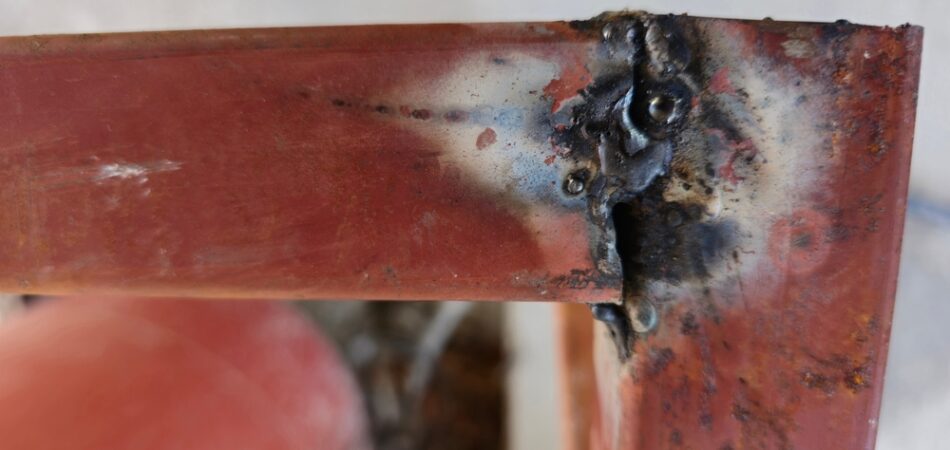
Porosity appears when gas becomes trapped inside the weld metal as it solidifies. The result is small cavities that weaken the structure. These gas pockets can be caused by contaminants on the metal surface, improper shielding gas flow, damp materials, or excessive travel speed. Although porosity may not always be visible on the surface, it can greatly reduce the load bearing capacity of a weld.
Professional welding services reduce the risk of porosity by maintaining rigorous cleanliness and environmental control. Expert welders thoroughly clean every workpiece to remove rust, moisture, paint, lubricants, or oils that could interfere with the weld. They also calibrate shielding gas levels carefully and monitor the welding environment to avoid drafts that might disrupt gas coverage. In many shops, humidity control and proper storage of electrodes and filler materials ensure that moisture does not contaminate the weld. These preventive steps promote full fusion and reduce gas entrapment.
Another key element of prevention is technique. Seasoned welders maintain consistent travel speed and precise torch angles so that the weld pool remains stable and well protected. In metal fabrication welding jobs where complex shapes are being welded, they may reposition workpieces to maintain consistent shielding and visibility. These layered strategies help ensure that porosity does not compromise the weld integrity.
Cracks
Cracks are among the most dangerous welding defects because they can rapidly propagate under stress. They may form during solidification, after cooling, or even weeks later depending on external loads and environmental conditions. Causes include poor joint design, excessive restraint, rapid cooling, contamination, and improper heat input.
Expert welders prevent cracking by selecting correct preheat temperatures and controlling cooling rates. Preheating reduces thermal stress and helps thicker metals reach uniform temperature during welding. This minimizes the rapid contraction that often leads to cracking. They also apply post heat in certain situations to slow cooling and relieve stress.
Professional welders evaluate joint design before beginning any metal fabrication welding project. Proper spacing, bevel angles, and fit up reduce stress concentrations. Additionally, trained welders choose filler materials that match the metallurgy of the base metal so the weld can expand and contract in harmony with the surrounding material.
Professionals also avoid over welding. Too much heat input can cause expansion that eventually results in shrinkage cracks. By monitoring amperage, voltage, and travel speed, they achieve a stable weld pool that cools in a controlled way. Millions of dollars in structural repairs could be avoided each year if all welds were performed with this level of care.
Undercutting
Undercutting happens when the weld metal fails to fill the groove along the joint edges, leaving a groove or depression. This weakens the workpiece because it reduces cross sectional thickness and creates stress points that may lead to fatigue failure. Undercutting typically occurs when the welder moves too quickly, uses excessive heat, or holds the electrode at the wrong angle.
Professional welding services control this defect by maintaining uniform and moderate heat input. Skilled welders adjust current settings according to material thickness and position. If heat is too high, the base metal melts away faster than filler material can replace it. If travel speed is too fast, the molten pool does not have time to flow properly.
Experienced welders also maintain a correct arc length. A long arc can generate too much heat and turbulence, making undercutting more likely. Professionals rely on years of practice to maintain the ideal arc distance, deposition rate, and work angle.
In addition, welders often perform visual checks during the process to confirm that the weld bead profile remains full and properly shaped. If early signs of undercut appear, they immediately adjust technique or settings. These proactive corrections help ensure the joint retains full strength.
Lack of Fusion
Lack of fusion means the weld metal does not fully bond with the base metal or previous weld passes. This breaks the continuity of the weld and creates internal weak points. It usually results from insufficient heat, incorrect travel speed, or poor joint preparation. Even visually appealing welds may suffer from lack of fusion if internal bonding is incomplete.
Professional welders address this issue by preparing joints thoroughly. No amount of skill can compensate for gaps filled with dirt, rust, or mill scale. Clean and well beveled edges help molten metal penetrate properly. Experts also match heat settings to the type and thickness of metal. Too little heat leads to shallow penetration, while too much heat can burn through or distort the metal.
Experienced welders monitor their travel speed carefully. Moving too fast prevents full fusion, while moving too slow risks overheating the base metal. Professionals maintain a steady rhythm that supports complete bonding. They often use weaving patterns or specific torch movements to ensure the entire joint receives consistent heat.
In metal fabrication welding projects that involve multilayer welds, professionals always grind or clean each pass before proceeding. This eliminates slag or other residue that could prevent fusion between layers. Through these steps, they achieve stable and durable connections that meet industry standards.
Slag Inclusions
Slag inclusions occur when nonmetallic materials, usually from flux, become trapped inside the weld metal. This disrupts the uniformity of the weld structure and reduces strength. Nearly all flux based welding processes can produce slag, but proper technique prevents it from becoming embedded in the weld.
Professional welding services minimize slag inclusions by maintaining controlled travel speed, correct electrode manipulation, and thorough cleaning between passes. Welders using flux coated electrodes remove slag completely after each pass. If any residue remains, it can be trapped in the next layer.
Experts also focus on correct electrode angles. If the angle is too shallow, slag may roll ahead of the arc and become trapped. If it is too steep, slag can become layered between the bead and the base metal. Professionals use consistent positioning to keep slag behind the weld puddle where it can be easily removed.
Heat input plays a central role as well. Too little heat can cause slag to freeze before it rises to the surface. Too much heat can cause instability that leads to inclusions. Skilled welders balance these factors so that each bead forms cleanly with minimal impurities.
Conclusion
Welding defects can compromise safety, increase repair costs, and shorten the life span of structures and components. Fortunately, these issues are largely preventable when projects are handled by trained experts who understand the science behind metal behavior and welding techniques. Professional welding services rely on careful preparation, proper equipment calibration, environmental control, and precise technique to produce strong and reliable welds. Whether the project involves large scale metal fabrication welding or small repairs, skilled welders ensure that every joint meets industry standards and withstands the demands placed upon it. By investing in professional craftsmanship, businesses and individuals can avoid costly defects and enjoy welds that stand the test of time.
Need a Machine Shop in Atmore, AL?
Escofab Inc. has been dedicated to providing quality machining and fabrication since 1981! Here at Escofab Inc. we utilize fabricating and machining to your specifications. We work to fit your needs and ensure customer satisfaction. Our friendly and informative staff are eager to assist you! Give us a call or come on in today; walk-ins welcome!